
Do Men Like Hyper-Independent Women? You're Asking the Wrong Question

The Google Search That Sent You Here
You've probably read this question at 11pm with the phone six inches from your face, half-scrolling a Reddit thread that splits right down the middle. Half the comments tell you exactly what's wrong with you. While the other half tell you not to change a fucking thing. And you've turned the question over enough times that you already know your own counterarguments before you even finish typing them, and some part of you is bracing for the answer to be "yes, but only if you tone it down."
So let's get the actual answer out of the way. It depends. Some men do, some men don't, and it depends on the man, the week, and the version of him you catch on a bad day. That answer is true and its absolutely fucking useless, because it doesn't touch the thing that's keeping you up at midnight.
You've probably run the numbers on this more than once. Replayed the last text he sent, decided what it meant, decided the opposite, gone back to check the timestamps. You know the exact shape of the spiral: wide awake at 1am, phone an inch from on your face, lighting it up like a stage light on broadway while you build a case for why this one's different and a case for why he's exactly like the last one, all at the same time.
I've asked myself this exact question more times than I'd like to admit, and the answer never once changed anything, because I was asking the wrong thing. The useful question is a different one. That's what I want to get into.
Why This Question Keeps Coming Back
Here's the pattern, or some version of it. You most likely attract men who are inconsistent, hot and cold, gone the second things get real, and you start wondering if your independence is what scares off anyone steady enough to stay. Or you end up with someone solid and grounded, and you're the one who gets restless, picking fights that don't need to happen, feeling caged instead of chosen. Or you're back to running the whole relationship solo, tracking everyone's schedule, managing everyone's feelings, resenting all of it and still doing it anyway.
And because you're the type who looks for the variable you can control, you settle on the one that shows up in every version of the story. You. So you start wondering if you need to take up less space, be softer, need more on purpose so someone else has something to do. That instinct makes sense but it also aimed at the wrong target.
The Real Question
The real question isn't whether men like hyper-independent women. It's what your independence has been protecting you from having to need.
For most of the women I work with, the self-sufficiency is the wiring. It probably got built early on when needing someone came at a cost, before you had any say in the matter, so you learned to stop needing people out loud.
When that's what's underneath, it tends to show up the same few ways. You're drawn to men who keep you a little off balance because steady reads as suspicious to a body that learned unpredictable was normal. Over-functioning becomes the closest thing to control you've ever had, and control has always felt like the only way to keep yourself safe. Taking care from someone without immediately needing to even the score feels impossible, because receiving without paying it back feels like debt you can't carry. You'll plan the surprise before he can plan his, pay for things you didn't have to, thank someone twice for something small, anything to make sure the ledger doesn't tip in his favor.
None of that has to do with whether men like you. It comes from what love got trained to feel like before you were old enough to have a say in it.
Your independence isn't causing the pattern. Both of them are coming from the same place. Which means you can practice needing more, let him pick the restaurant, work through the whole list the internet hands you, and still end up in the same dynamic with the same guy yet different name.
What Needs to Change
Tips for seeming less intimidating on a first date won't touch it. Neither will a softer, smaller version of you that's easier for someone else to feel useful around. Because fuck that! What needs to change is the wiring underneath the independence, and that's a different scenario entirely.
Your capability was never the problem. Neither was having your own life, or not needing someone to function day to day. The problem is when independence stops being a choice and turns into a compulsion: when you can't let someone in even when you want to, when safe feels suspicious and unpredictable fuckery feels like home, when you're so conditioned to carrying everything alone that real partnership starts to feel like a threat to the whole operation instead of something you want.
That's an outdated system still running its old job, in a life that doesn't call for it anymore.
This is exactly the kind of pattern attachment-focused EMDR was built for, going back to where the wiring got laid down instead of talking through it one more time, and giving your body new information to run on. That's the actual target: the source code underneath the pattern, the part that's been running the show since before you had any say in it. Some women do that work in weekly sessions. Some do it in an intensive, focused full days built around the specific memories that built the wiring in the first place. Either way, the target's the same.
When that shifts, the independence usually stays. What changes is the compulsive edge on it, the part that can't turn off. You get to choose self-sufficiency instead of defaulting to it because your body doesn't know it has another option.
Three Things to Try This Week
Audit the pattern, not the people.
Write down your last three significant relationships, or the ones that almost were. Next to each one, note the emotional texture: did you feel anxious, did you over-function, did you pull back when things got real, did you stay longer than you should have. You're looking for what stayed the same across different men. That consistency is the signal. The people were different. The pattern was you, because that same wiring was running the show in every one of them.
Let one thing be someone else's problem.
I don't mean only in your relationships but in your regular week. Let one thing you'd normally handle get handled by someone else, or not handled at all. Notice what happens in your body when you don't fix it. That discomfort is data about how much of the independence is a choice and how much of it is running on autopilot.
Run a 90-day consistency tracker. (this one was a game changer for me)
Next time you're drawn to someone, track one thing for 90 days: does he do what he says he'll do. This isn't just the grand gestures but the small ones, as these are tell tales. You're building a track record instead of making decisions off how someone makes you feel in the first three weeks, which is exactly when the familiar feeling is loudest and hardest to argue with. When your body learned to trust the storm, steady feels like the calm before it. Ninety days is how it learns that quiet can also mean safe.
I'm Jessica Brooks, a Licensed Mental Health Counselor and EMDRIA Certified Therapist™, and I built Untamed Therapy in Cape Coral for exactly this kind of work. I asked myself this same question about my own life once too. I used to keep my weekends up in the air on purpose, just in case the guy I was dating decided he wanted to see me. Half the time he didn't call. The other half he canceled 'cause something came up.'
When I met my husband, I stopped doing that. I made plans with friends and kept them. I made plans with him too, and on the off chance something was 'up in the air' if something came up that I wanted to do, I told him I wasn't available anymore and we found another time. No waiting around to see if he'd show up first. He put in the effort too, from the start, so it was never a one-way wait-and-see where he became the only thing I was tracking. We each had our own lives, then we built a life together on top of them. That's rewiring work, all the way down to the source code.
If you recognized yourself somewhere in this, you don't need one more article at midnight. You need to know what's running the pattern. If you're ready to find out, I'd like to be the one you do that with.
Schedule your free consultation.
And if intensives aren’t your thing or you’re just not ready to jump in the deep end yet, no problem, check out Psychology Today, Headway, TherapyFinder, and Grow Therapy for therapists with availability. You can also check out My Therapists Peeps in SWFL. Also, Open Path is an excellent resource for finding therapists who offer sliding scale pricing, which can make ongoing therapy more affordable.
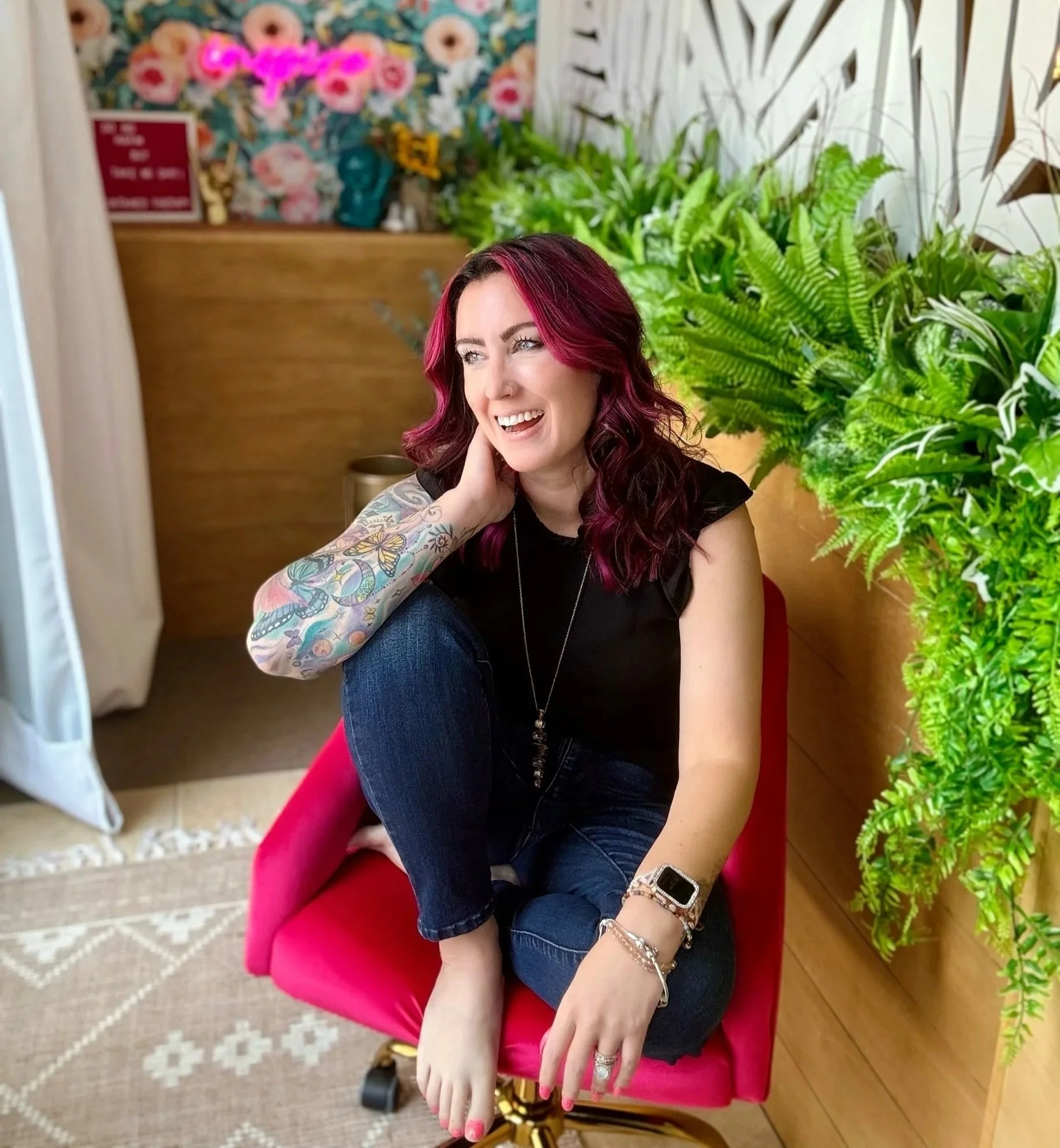
About the Author
You don’t have to keep being the strong one who’s silently falling apart. I help you heal the trauma behind your burnout, ditch the hyper-independence, and finally feel like you again.
-Jessica Brooks, Licensed Mental Health Counselor (LMHC), EMDR-Certified Therapist offering EMDR Intensives in Cape Coral, FL
