
The Cost of Always Being the Strong One (And Who You Are Without That Role)

TL;DR
If “the strong one” has been your full-time job for as long as you can remember, this one’s for you. Hyper-independence isn’t a personality trait. It’s a trauma response that learned to dress itself up as something to be admired. The signs of hyper-independent women go way deeper than just “liking to do things yourself,” and until you understand the root, no amount of positive affirmations or bubble baths is going to touch it. This blog digs into why you became the strong one, what it’s costing you, and who the hell you actually are when you finally put that armor down. Spoiler: she’s worth meeting.
The Question Nobody Asked Me Until I Was Ready to Fall Apart
I want you to think about the last time someone really asked you how you were, and you told them the truth.
Not “I’m fine.” Not “busy but good.” Not the curated highlight reel version designed to reassure them so they don’t worry.
The actual truth.
Can’t remember? Yeah. Me neither, for a long time.
Here’s the thing about being the strong one: it becomes so baked into your identity that you stop being able to tell where the role ends and you begin. For so long, you’ve been the reliable one, the capable one, the one who handles it, the one who shows up, the one who doesn’t need anything. Now the idea of being anything else feels genuinely disorienting. Maybe even terrifying.
Who are you without the badge of being the strong one?
If that question just made your stomach drop a little, keep reading. Because that feeling is not weakness. That’s the most important question you might sit with.
Let’s Call It What It Actually Is
It’s compulsive self-reliance rooted in the deep, body-level belief that needing people is dangerous. It’s not a preference. It’s a protection mechanism. And it didn’t come from nowhere.
Let me be clear: hyper-independence is not the same as being independent. Being independent is healthy. Choosing to handle things yourself because you’re capable is a skill. Hyper-independence is what happens when asking for help never felt safe.
Hyper-independence as a trauma response is one of the most misunderstood, under-discussed, and over-praised survival strategies out there.
It came from a childhood or a series of relationships, where depending on people led to disappointment, abandonment, criticism, chaos, or the creeping realization that your needs were simply "too much" for the people around you to hold.
So your brain, being the absolute genius that it is, built a workaround: Don’t need people. Do it yourself. Be the capable one. Be the strong one. Be the one who never falls apart, because falling apart is where you got hurt last time.
That is hyper-independence as a trauma response in a nutshell. And it’s brilliant, actually. Until it fucking isn’t.
The Signs of Hyper-Independent Women (That Go Deeper Than the Surface Stuff)
Most lists about the signs of hyper-independent women cover the obvious: you don’t ask for help, you do everything yourself, and you’re controlling. Ok, true. But let’s go a little deeper, because the subtler signs are where the real damage lives.
You Don’t Know What You Actually Want
Not in a vague, philosophical sense. In a very literal, practical one. Someone asks what you want for dinner and you genuinely can’t answer to save your damn life. Someone asks what would make you happy and you draw a complete blank. Because you’ve spent so long managing everyone else’s needs, anticipating everyone else’s reactions, making yourself small enough to fit into whatever space is available. Somewhere along the way, you stopped tracking your own wants, needs and desires entirely. They may have felt irrelevant or even dangerous to express. So you stuffed them down, real deep into the internal abyss, never to be seen again.
Your Identity Is Built on Function, Not Feeling
You know who you are in terms of what you do. You are the one who handles things. The one people call. The one who shows up. The one who doesn't crumble. But ask you who you are when you're not being useful to someone? When there's no crisis to manage, no person to support, no problem to solve? Crickets.
Because hyper-independence as a trauma response doesn't just steal your ability to receive care. It steals your sense of self that exists outside of being needed.
Rest Feels Like a Personal Failure
Rest is not just uncomfortable, but it feels like an active moral failing. Like you "should" be doing something, or the stillness itself is an judgement of your worth. This is one of the most under-recognized signs of hyper-independent women. The inability to rest without guilt, because your sense of value is so tightly fucking wired to your output that doing nothing registers as "being nothing".
You’ve Forgotten How to Be Soft
There was probably a version of you, somewhere back there, who was soft. Who cried easily, felt things deeply, needed comfort without shame. And somewhere along the way, that version got hidden because soft wasn’t safe. Soft got you hurt. Soft meant people left, took advantage, or looked at you differently. So you tucked her away. And now you can’t quite find her, and honestly, you’re not sure you’d even recognize her if you did find her.
You’re Exhausted in a Way Sleep Doesn’t Fix
This is the one that usually breaks through the denial. You can sleep eight hours and wake up tired or you're tired but wired. Not because something’s medically wrong (although chronic stress does absolutely do a number on your body), but because you are carrying a weight that no amount of rest addresses, because the weight isn’t physical. It’s the emotional weight of being the strong one. Every. Single. Damn. Day. Without a break.
You’re the Caretaker in Every Relationship
In your friendships, your family, and your romantic relationships, you are reliably the one doing the emotional labor. The one who checks in, who remembers, who shows up. And while part of you genuinely loves showing up for people, another part of you is deeply, quietly resentful. Because you never asked to be the only one holding everything. You just didn’t know there was any other option.
The Thought of Letting Someone Else Take the Lead Gives You Actual Anxiety
Delegation is not a skill issue. It’s a safety issue. Your nervous system has learned that when you’re not in control, things go wrong. People let you down. Balls get dropped. And you’re the one who has to clean it up any fucking way. So you hold on, not because you’re a control freak, but because control is the only thing that ever felt reliable.
Steps Back to Yourself: Shedding the “Strong One” Identity
Step 1: Acknowledge the Grief
This one surprises people. But here’s the thing: letting go of the strong one identity involves grieving her. Grieving the childhood where you weren’t allowed to be soft. Grieving the relationships where your needs didn’t matter. Grieving the version of yourself who got buried because she had no other choice. That grief is real and it deserves space. Don't skip it in the rush to heal. This one takes time.
Step 2: Get Curious About the Original You
Who were you before you became the strong one? What did you love? What made you laugh until you couldn’t breathe? What scared you that you never told anyone? What did you need that you never got? This isn’t a therapy exercise to perform. These are real questions that deserve real answers. Journal it. Sit with it. Let the answers come slowly if they need to.
Step 3: Practice Being Witnessed
The strong one doesn’t let people see her struggle. So one of the most direct antidotes is intentionally letting one safe person witness one real thing about how you’re actually doing. Not everything. Not a trauma dump. Just one true thing, offered to one safe person, and seeing what happens. Doing this repeatedly is how your brain learns that being seen doesn’t automatically mean being abandoned or hurt.
Step 4: Let Something Be Someone Else’s Job
Pick one thing this week that you would normally do yourself out of compulsion rather than genuine preference. And don’t fucking do it. Let someone else do it, or let it not get done. Then sit with the discomfort of that without fixing it. You are not the only person capable of keeping the world from collapsing. It is wild how long it takes us to really believe that.
Step 5: Go After the Root with EMDR Therapy
All of the above matters. All of it helps. But if you want to stop cycling through the same patterns, you have to go after the experiences that built "the strong one" identity in the first place.
That is the work of EMDR therapy. Not talking about the past indefinitely, but reprocessing it. Changing how it lives in your body. Updating the survival beliefs that were formed in a context that no longer exists. So that “I have to do everything myself” loses its grip not because you’ve forced it to, but because your nervous system finally has enough evidence that it’s no longer true.
That’s what my EMDR Intensives are built for. And it is, without exaggeration, some of the most profound work I have ever witnessed. It truly is an honor to sit in the therapist seat.
Why Work With Me? Here’s the Unfiltered Version.
I am a Licensed Mental Health Counselor (LMHC) and EMDR-Certified Trauma Therapist. I own Untamed Therapy & Consulting in Cape Coral, FL, and I have spent years working specifically with emotionally exhausted, hyper-independent adults who are done surviving and ready to actually live.
But here’s what the credentials don’t tell you: I know this territory from the inside. I was the strong one. I did the “I’m fine” thing. I carried everything and asked for nothing, and had a full nervous system breakdown that eventually happens when you run that program long enough. And I did the EMDR work that changed everything.
I am not interested in being your therapist who nods sympathetically while you spin your wheels for years. I will be honest with you. I will call things what they are. I will hold space that is real and judgment-free. Because you have had enough of people telling you you’re doing great while you’re quietly falling the fuck apart.
My EMDR Intensives are designed for the woman who is ready to go deep and actually change the root. Not manage it. Change it. If that’s you, let's talk.
Takeaway
Being “the strong one” is not a personality type. It is a trauma response with excellent PR. The signs of hyper-independent women go far deeper than just preferring to do things yourself. They include losing touch with your own wants, building an identity entirely around function, chronic exhaustion that rest can’t fix, and a profound disconnection from the softer, needier, fully human version of yourself that got buried somewhere along the way. Hyper-independence as a trauma response develops when depending on people stopped feeling safe. The path back to yourself isn’t about dismantling your strength. It’s about finding out who you are when strength isn’t the only option you have. EMDR therapy, specifically EMDR Intensives, is one of the most effective ways to go after the root of this pattern and actually change it, not just manage it. You’ve been the strong one long enough. It’s time to find out who else you are.
Ready to Find Out Who You Are Underneath It All?
If something in this post hit a nerve, that recognition is information, and you don't have to keep outrunning it.
My EMDR Intensives are built for this exact work. For the women who have been carrying everything and are ready to put some of it down. We go to the root. We reprocess the story your brain has been replaying since forever. And we do it in a space that is real, compassionate AF and judgment-free.
You don’t have to keep being the strong one. There is another way to live. I would love to help you find it.
And if intensives aren’t your thing or you’re just not ready to jump in the deep end yet, no problem, check out Psychology Today, Headway, TherapyFinder and Grow Therapy for therapists with availability. You can also check out My Therapists Peeps in SWFL. Also Open Path is a great resource for finding therapists who offer sliding scale pricing, which can make ongoing therapy more affordable.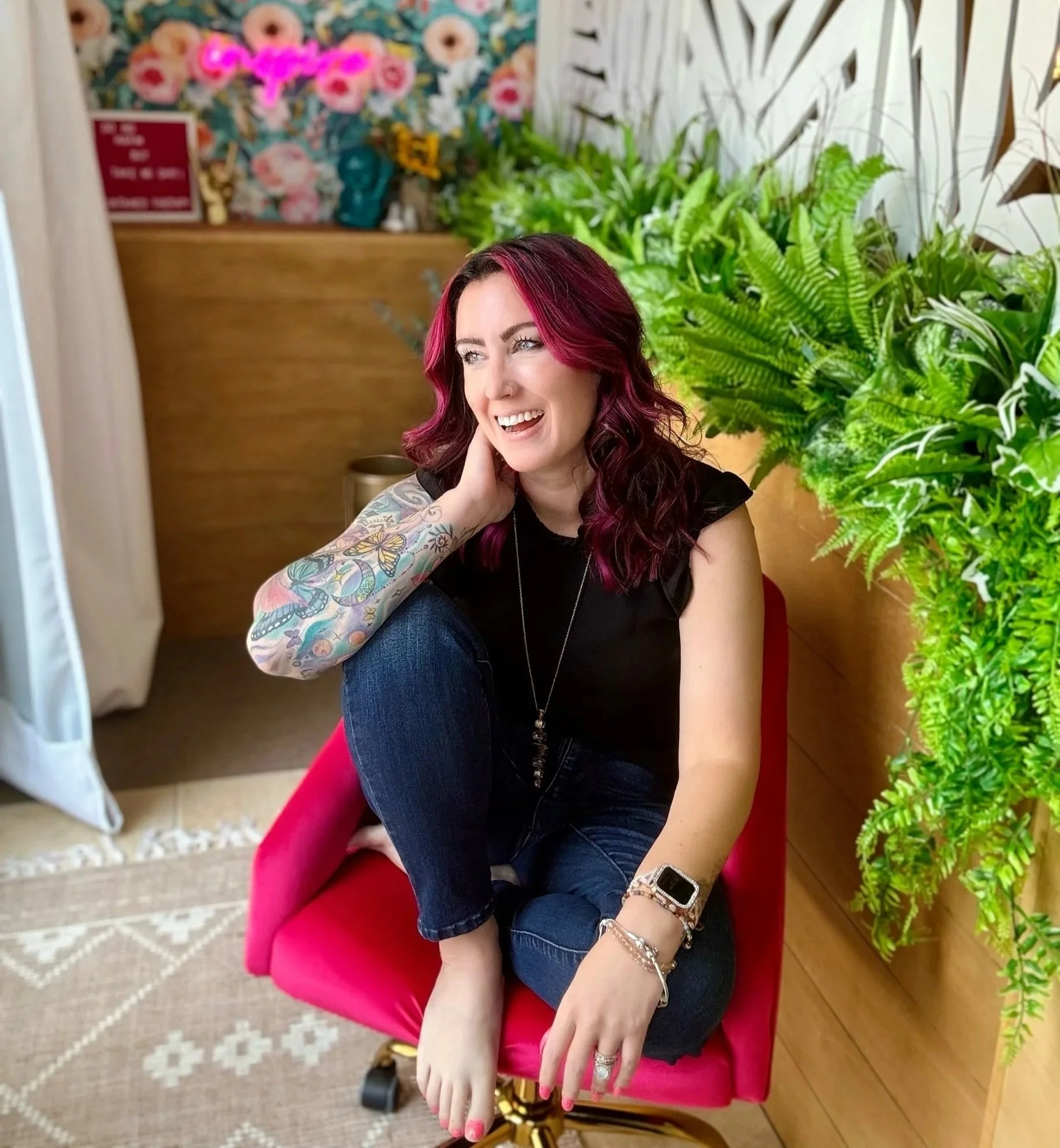
About the Author
You don’t have to keep being the strong one who’s silently falling apart. I help you heal the trauma behind your burnout, ditch the hyper-independence, and finally feel like you again.
-Jessica Brooks, Licensed Mental Health Counselor (LMHC), EMDR-Certified Therapist offering EMDR Intensives in Cape Coral, FL
