
Outgrowing the Fixer Role: How to Rediscover Who You Are Beyond Trauma Survival

TL;DR
If you’re a hyper-independent woman who built her identity around being the fixer, the helper, the strong one, and now you feel empty, restless, or low-key panicked without that role, you are not broken. You are in a transition. In this blog, it breaks down why the fixer personality forms, why it stops working, how to stop being the fixer in relationships without imploding your whole life, and how EMDR intensives in Cape Coral, Florida, can help you rebuild an identity that is not rooted in self-abandonment.
The Moment Fixing Stops Working
There is a very specific kind of grief that hits when fixing no longer saves you.
You stop jumping in to solve everyone’s problems.
You stop managing emotions that are not yours.
You stop being the emotional Swiss Army knife.
And instead of relief… you feel lost as hell.
I see this moment all the time with hyper-independent women. You finally realize the fixer role is burning you alive, but the second you try to step out of it, your nervous system panics and whispers, “Cool… so who the f*ck are you now?”
If that hits you in the chest, keep reading.
Why the Fixer Personality Exists
Let’s get one thing clear.
The fixer personality is not a damn personality flaw.
It is a trauma adaptation.
For many hyper independent women, fixing became survival because at some point in your life:
Someone else’s emotions determined your safety
Chaos required you to grow up fast
Being useful meant being valued
Staying alert prevented things from falling apart
So your nervous system learned this rule: “If I am needed, I am safe."
That is not personality.
That is conditioning.
This is why you can logically understand how to stop being the fixer in relationships and still feel physically uncomfortable AF not being the fixer. Your body is reacting to a perceived loss of safety, approval or love, not a bad habit.
Why Outgrowing the Fixer Role Feels So Damn Unsettling

Here is the part no one prepares you for.
When you stop fixing, you may lose:
Your sense of purpose
Your role in relationships
The illusion of control
The identity that once kept you safe
So even healthy change can feel like grief, anxiety, or emptiness.
That doesn’t mean you made the wrong choice.
It means you are in the messy middle.
How to Stop Being the Fixer in Relationships Without Imploding
These are non-cringe, nervous-system-aware tools you can use right now.
1. Name the Withdrawal
Say this out loud: “I am not failing. I am detoxing from overfunctioning.”
Your body needs language for what is happening, so it does not assume danger.
2. Practice Sitting on Your Hands
When the urge to fix hits, pause for 60 seconds.
No action. No advice. No rescuing.
Discomfort does not mean something is wrong. It means you are breaking a pattern.
3. Track Who Panics When You Stop Fixing
This one stings. Pay attention to who gets weird, distant, or irritated when you stop over-functioning.
That reaction is data.
4. Build Identity Through Sensation, Not Roles
Ask yourself daily: “What feels grounding in my body at this current moment?”
Not productive. Not impressive. Just regulating.
5. Borrow Structure While You Rebuild
When identity feels unstable, structure creates safety. This is where intensive trauma work matters.
You Are Not Losing Yourself, You Are Meeting Yourself
Here is the reframe that changes everything.
You are not empty without the fixer role.
You are unmasked.
The fixer was never your identity.
It was your armor.
And now that armor is too heavy to keep wearing.
For hyper-independent women, healing is not about becoming softer or less capable. It is about choosing yourself as fiercely as you choose everyone else.
Why EMDR Intensives Help Fixer Personalities Heal
Talk therapy can help you understand the fixer role.
EMDR intensives help your body release it.
As a trauma-trained therapist in Cape Coral, Florida, I specialize in working with hyper-independent women who are exhausted AF from holding everything together. EMDR intensives allow us to target the original moments where fixing became survival, not just manage the symptoms.
You do not need years of insight.
You need to feel safe without being needed.
That is what this work does.
Takeaway
The fixer role is a trauma response, not your identity
Outgrowing it feels scary because safety used to live there
You’re not failing, you are transitioning
Healing means learning who you are when you stop putting yourself last.
You are allowed to exist without being useful.
EMDR Intensives in Cape Coral, Florida
If you are done over-functioning in your relationships and ready to stop living in fixer mode at a nervous-system level, EMDR intensives might be your next right move.
I offer EMDR intensives for hyper-independent women in Cape Coral, Florida, designed for deep, focused healing without dragging this out for years.
Schedule a consultation to see if an EMDR intensive is the right fit for you.
You do not need to earn rest, love, or belonging anymore.
And if intensives aren’t your thing or you’re just not ready to jump in the deep end yet, no problem, check out Psychology Today, Headway, TherapyFinder and Grow Therapy for therapists with availability. You can also check out My Therapists Peeps in SWFL. Also Open Path is a great resource for finding therapists who offer sliding scale pricing, which can make ongoing therapy more affordable.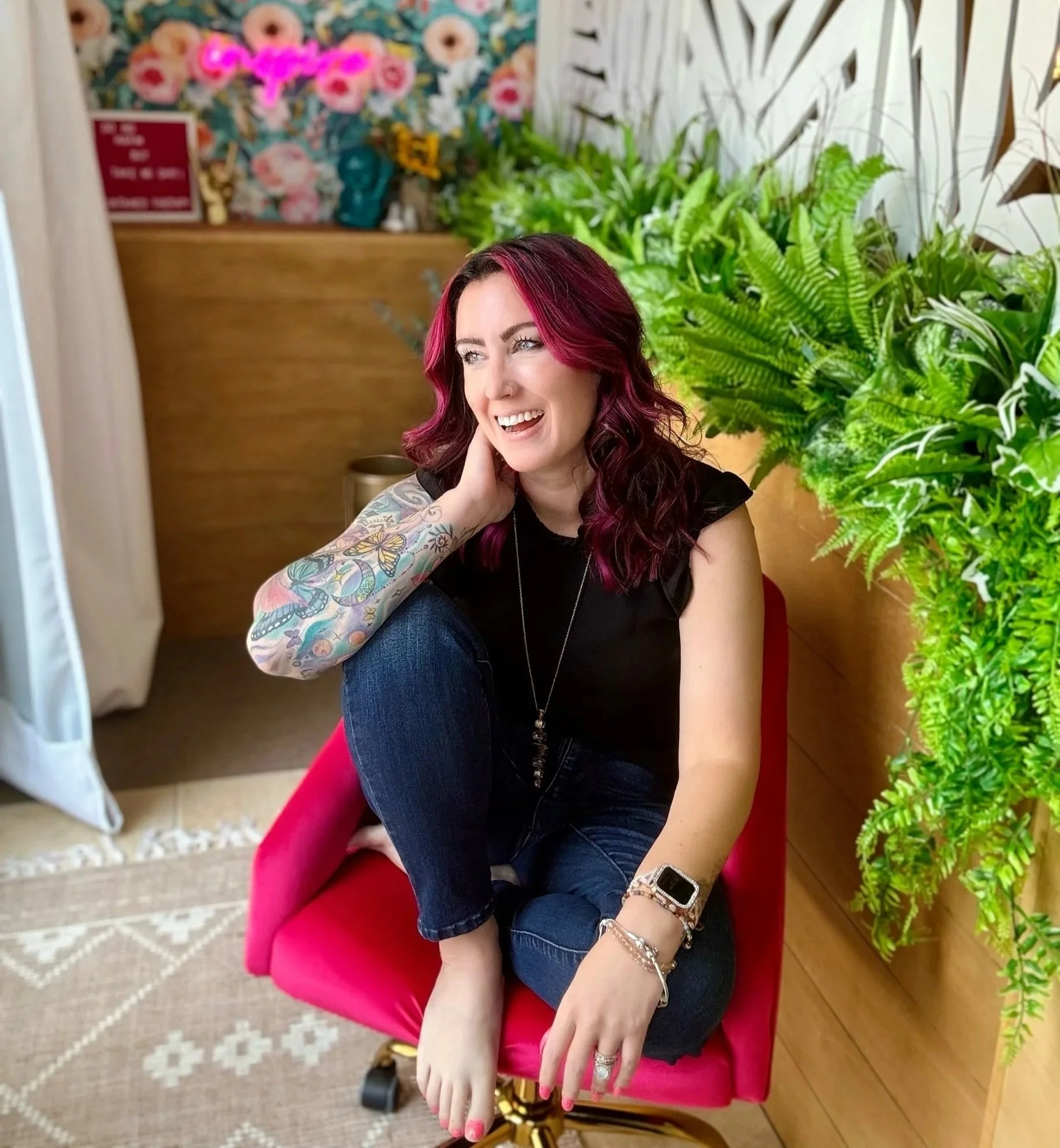
About the Author
You don’t have to keep being the strong one who’s silently falling apart. I help you heal the trauma behind your burnout, ditch the hyper-independence, and finally feel like you again.
-Jessica Brooks, Licensed Mental Health Counselor (LMHC), EMDR-Certified Therapist offering EMDR Intensives in Cape Coral, FL
